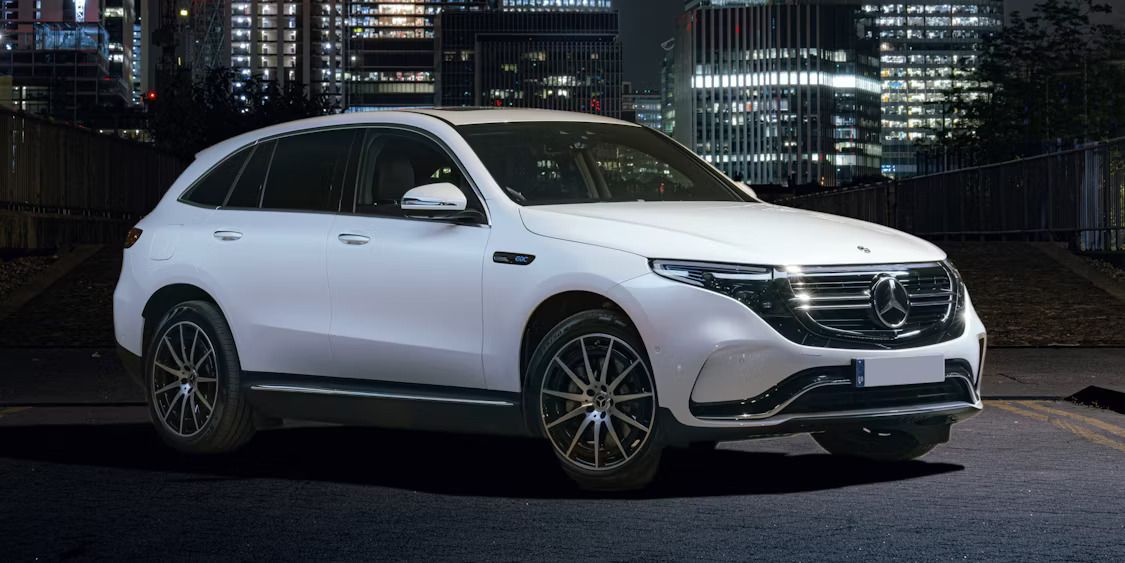
The EQC was Mercedes-Benz's first serious entry into the dedicated-electric SUV market, and even if the specification sheet now looks modest next to newer EQ models, the engineering choices tell you a lot about how the brand approached its EV transition.
Powertrain
Two asynchronous motors — one at each axle — produce a combined 402 horsepower and 564 lb-ft of torque. The 80 kWh battery is good for an EPA-estimated 220 miles of range, modest by current standards but entirely usable for daily driving. 0–60 mph takes 4.8 seconds; the EQC is quicker in a straight line than most buyers will expect from an SUV this size.
Design
Based on the GLC platform, the EQC adopts a smoother, less fussy design language with a black-panel grille, continuous light bar at the front and distinctive LED signatures at both ends. Inside, Mercedes resisted the temptation to go full minimalist — the dash features the familiar MBUX dual-screen setup and the material quality is unmistakably premium.
Refinement
Where the EQC excels is in refinement. Acoustic glass, extra sound-deadening around the motors and a specially-tuned air suspension make the EQC one of the quietest cars in the segment regardless of powertrain. One-pedal driving via the paddle shifters is intuitive, and three regen modes let the driver dial in exactly how aggressive the deceleration should feel.
Technology
MBUX includes EV-specific features — charging station search, pre-conditioning via the smartphone app and route planning that factors in battery state of charge. DC fast charging peaks at 110 kW, which allows a 10–80% top-up in about 40 minutes.
Verdict
The EQC isn't the longest-range or fastest-charging electric SUV, and more recent entries like the EQE SUV and EQS SUV address those limitations with the newer EVA platform. But as a comfortable, quiet, well-built electric luxury SUV, the EQC made exactly the kind of Mercedes-Benz statement you'd expect — and remains a credible used-market pick for buyers prioritizing refinement over range.