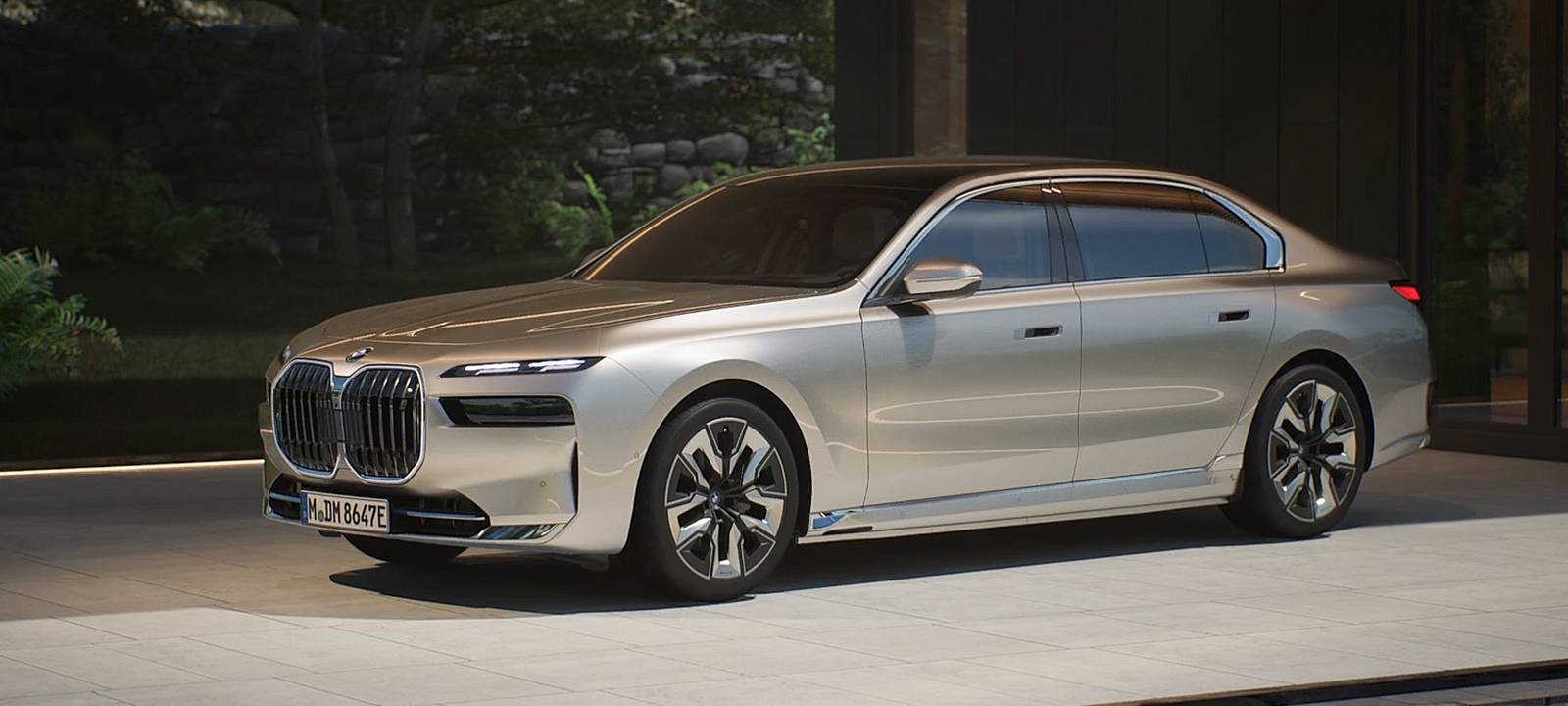
The Mercedes-Benz EQS and the BMW i7 arrived within a year of each other, both carrying the weight of a brand's long-term EV strategy. On a specification sheet they're close rivals. On a 500-mile road trip, in freezing weather, or stuck at a flaky public DC fast charger, the gap between them opens up fast.
Platform and philosophy
The EQS sits on the EVA platform — Mercedes' dedicated electric architecture. That means a flat floor, a long wheelbase, a huge battery and a shape optimized for aerodynamics first (0.20 Cd, the lowest of any production car for most of its life). The i7, by contrast, shares the CLAR architecture with the gasoline and plug-in-hybrid 7 Series. BMW's bet was that a single platform could serve all three powertrains without major compromises. The EQS was engineered as an EV; the i7 was engineered as a 7 Series that happens to be electric.
Range and real-world efficiency
EPA numbers favor the EQS 450+ at up to 352 miles, with the i7 xDrive60 rated at 318 miles. In practice, on highway cruising at 75 mph in moderate weather, both cars return within a mile or two of each other — roughly 2.9 to 3.1 miles per kWh. Where the EQS pulls ahead is in winter and in stop-and-go traffic, where its heat-pump system and more aggressive regenerative braking recover more energy. In July, the i7 catches up.
Charging
This is the first place the comparison stops being close. Both cars run on 400-volt architectures and peak at 200+ kW on compatible DC chargers. The EQS holds its peak charging rate longer, averaging roughly 160 kW across a 10–80% session. The i7 drops off faster above 60% state-of-charge. On a 300-mile road trip with a single 20-minute top-up planned, the EQS reliably banks more usable range from the stop. On a 600-mile trip with two stops, the difference compounds.
Ride and refinement
Both cars ride on air suspension with adaptive dampers. The i7 is firmer, more composed through quick direction changes, and corners flatter under load. The EQS is softer, floatier at speed, and better over broken pavement. If "flagship luxury" to you means isolation, the EQS wins. If it means an executive sedan that still feels like it's engineered to be driven, the i7 is sharper.
NVH is a draw. Both cars are among the quietest production vehicles in the world. The EQS's acoustic glass is extraordinary; the i7's bulkhead treatment is marginally better at isolating low-frequency road boom on coarse surfaces.
Interior
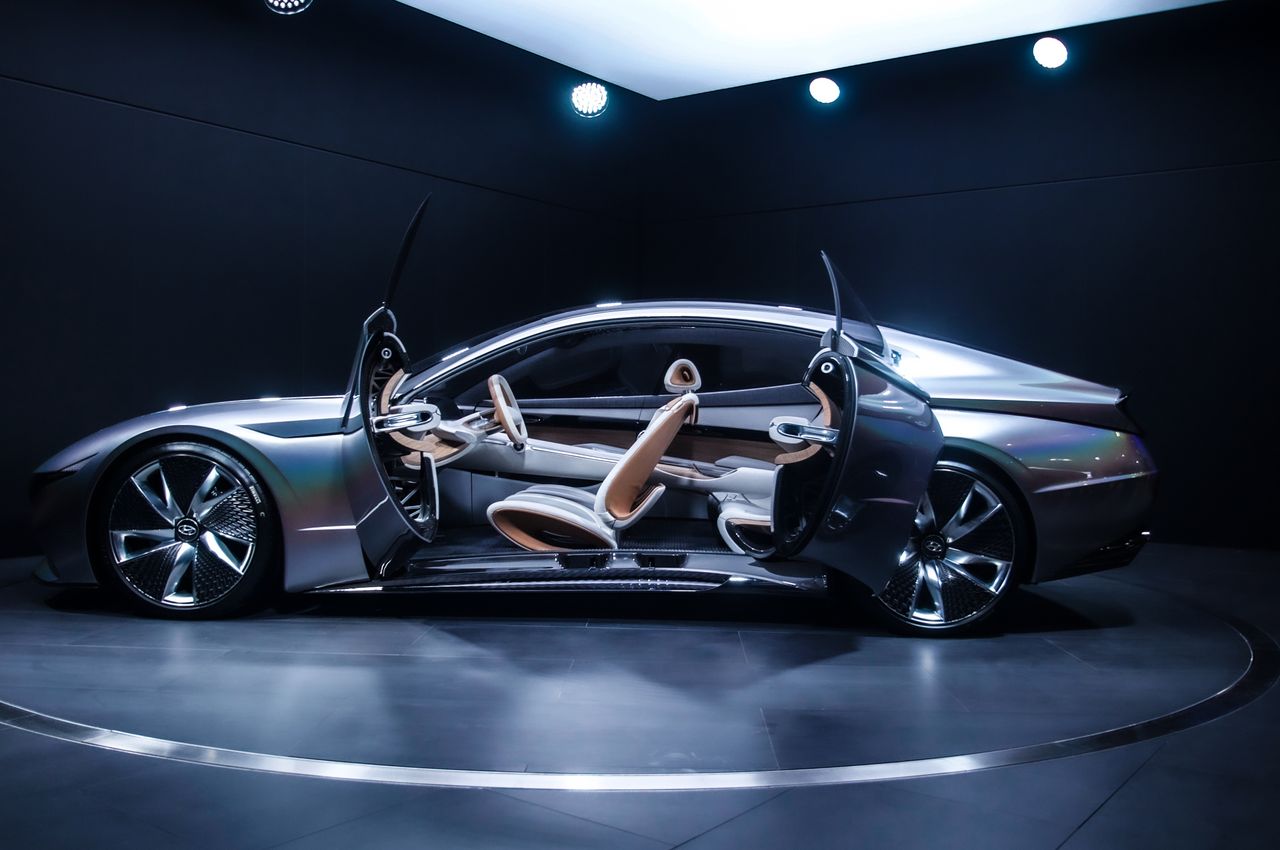
Here the two cars diverge sharply in philosophy. The EQS's optional 56-inch Hyperscreen spans the entire dash — passenger display, instrument cluster and center screen under a single curved glass panel. It's a technological statement that works better than it has any right to in daily use, provided you accept Mercedes' decision to put almost every function behind a touchscreen tap. The i7's cabin is more conventionally luxurious, with physical switchgear remaining for climate basics and the optional rear-seat Theater Screen (31.3 inches, 8K, built-in Fire TV) that genuinely transforms the rear compartment.
Software
MBUX in the EQS is faster than iDrive 8.5 in the i7, and the AI-powered voice assistant is noticeably better at natural-language queries. The i7's iDrive is more customizable and has better physical shortcuts for the functions you actually use while driving. Over-the-air updates work on both; the frequency and scope of updates has been higher on the EQS in the first two model years.
Build quality and durability
Early EQS models had more reported electrical gremlins — infotainment restarts, headlight module failures, occasional 12V battery issues. The i7's software has also had rough patches, but mechanically the car has been more consistent. If you're buying new, both are backed by multi-year warranties; if you're shopping used, service history matters more here than it would on a conventional luxury sedan.
Which one works in the real world?
If your real world is a 50-mile commute, a 300-mile road trip twice a year, home charging and a focus on isolated, quiet luxury — the EQS is the better car. The charging advantage is real, the efficiency advantage is real, and the Hyperscreen cabin is genuinely cutting-edge.
If your real world is a mix of driving yourself and being driven, if you want a car that still handles like a 7 Series when you're behind the wheel, and if the rear seat matters more than any other row — the i7 is extraordinary. The optional Theater Screen alone makes it a more compelling chauffeured car than the EQS — which is exactly why premium limousine service.com operators are moving so quickly to add it to their fleets.
Neither car is perfect, and both reward buyers who understand what they're trading off. The EQS trades driving character for engineering purity. The i7 trades efficiency and charging flexibility for a more traditional luxury-sedan feel. In 2026 those are the two legitimate answers to the question of what an electric flagship should be — and reasonable buyers can disagree about which is right.